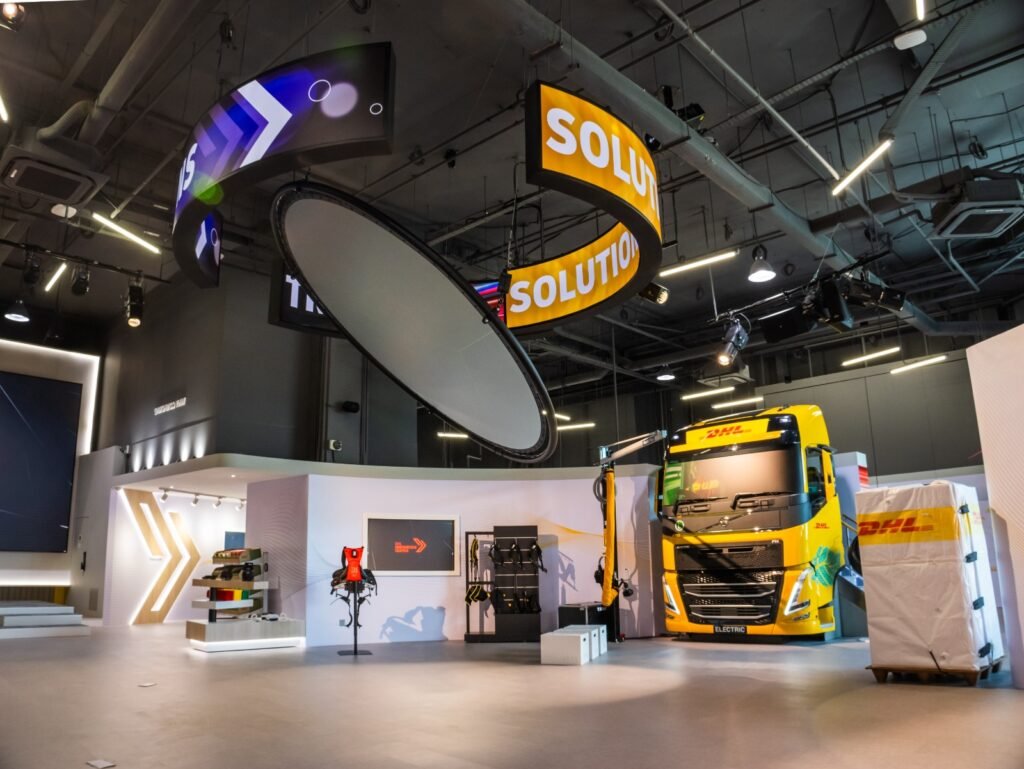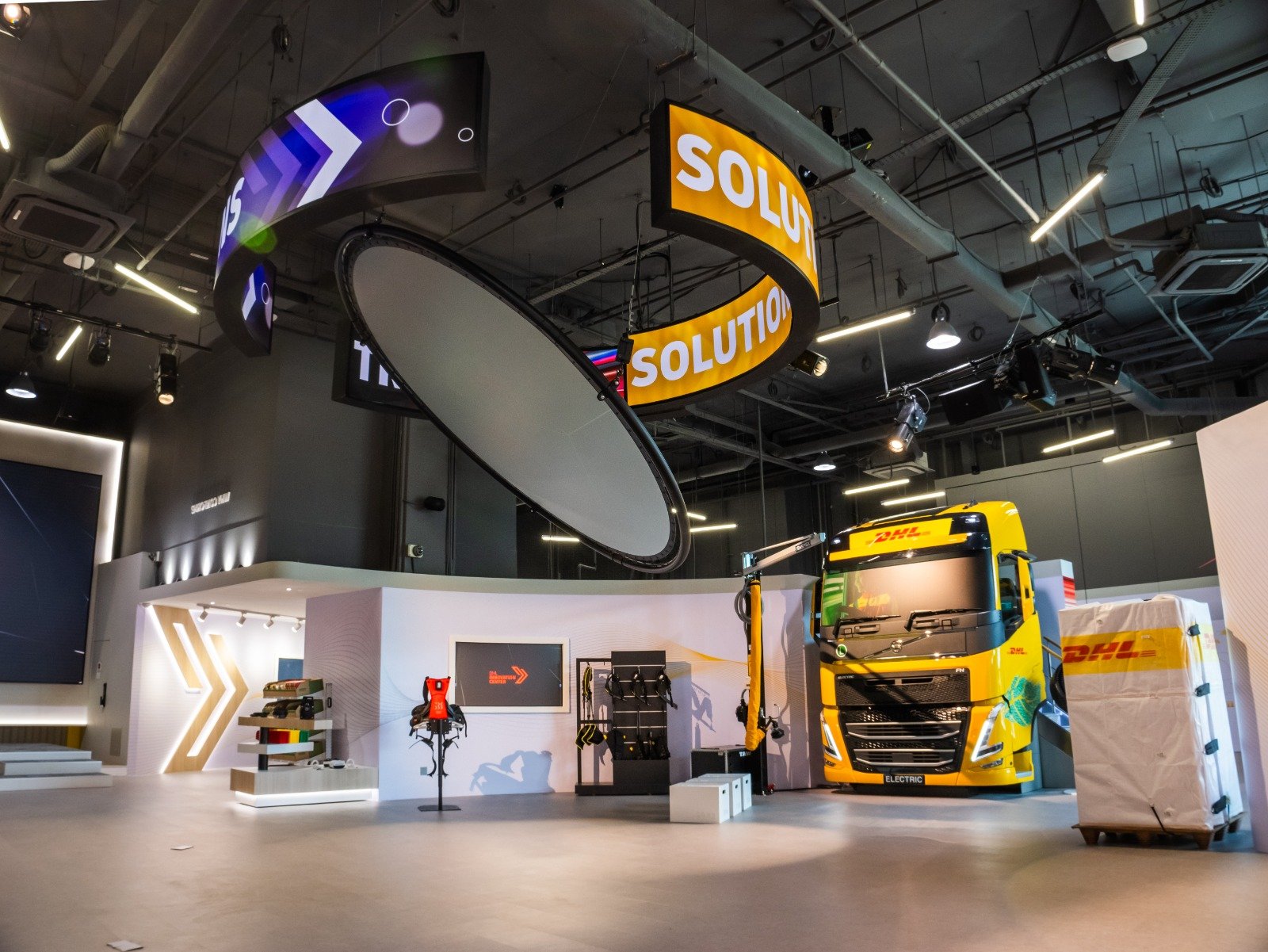
1. It’s such an incredible Center and a real bonus having something like this in the region. How do you balance DHL’s global strategy roadmap with the specific, hyper-growth needs of the Asia-Pacific market?
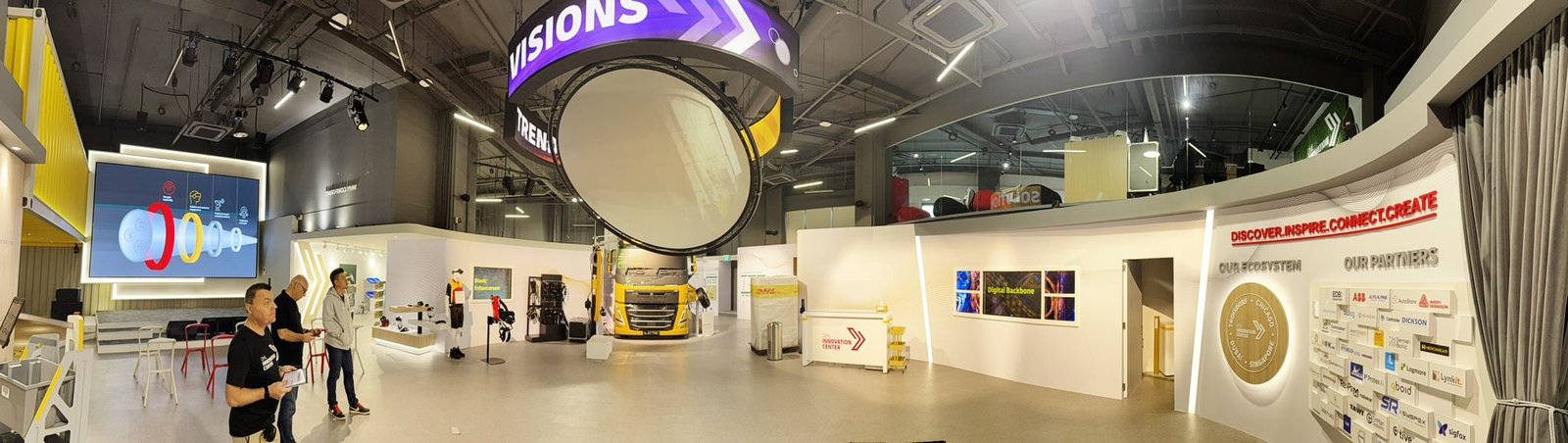
Guided by our global DHL Logistics Trend Radar, the Center offers tailored logistics innovation discovery experiences, workshops, and events that help identify opportunities, solve challenges, and shape the future of logistics around each customer’s specific business priorities. In this way, we contribute to ‘Strategy 2030’ by creating new customer value through tangible innovation that addresses the needs of today and tomorrow, while enabling customers to grow in key geographies in the Asia Pacific region and beyond.
The DHL Logistics Trend Radar, now entering its 8th edition (planned for release in late 2026), acts as a guide in tackling these opportunities by providing a shared understanding of the future direction of logistics. It enables us to anticipate developments such as talent shortages, the need for decarbonization, growing data complexity, and increasing customer expectations around speed and flexibility.
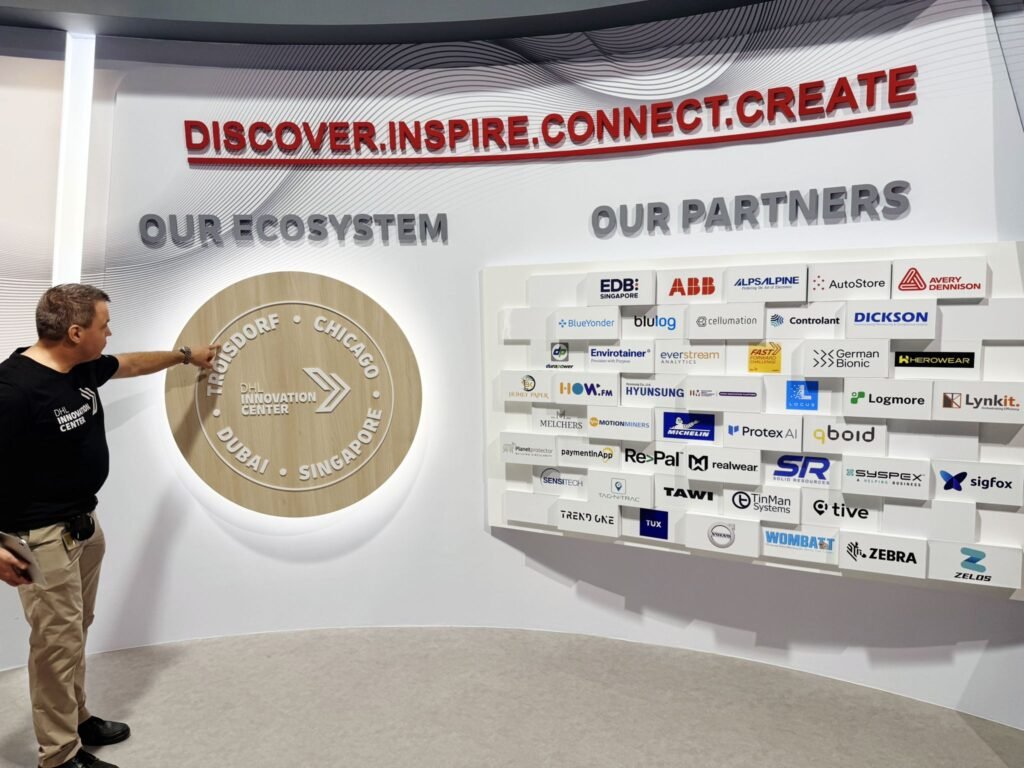
Shaping tomorrow requires both innovation and collaboration – globally, and locally. That is why we work closely with customers, partners, and industry players to co‑create solutions that address these challenges, whether through new digital platforms, automation technologies, or environmentally sustainable practices. Collaboration within and beyond the logistics sector remains one of the most effective ways to stay ahead of evolving needs and develop breakthrough solutions.
2. Can you talk us through this co-creation model? And how do you identify which emerging technologies are ready for a “Proof of Concept”?
In DHL, we focus on solving problems, instead of merely testing specific technologies. Technology is simply the means to an end. In most cases, there are multiple ways to solve the problem. For example, if we want to increase the piece picking throughput in a warehouse, we could deploy a robotic Assisted Picking solution such as Locus robots or equip our existing workforce with Augmented Reality goggles that simplifies and optimizes their picking routines. Both would help to achieve the goal but would require different operational setups and paths to deployment.
To decide on which technology should be trialed for which use case, we develop a deep understanding of the actual issues at hand, the as-is processes in place and our customer and operations’ objectives. After which, it is critical to determine which technologies and solutions will meet all or most requirements, including expected benefits/ROI, and cost of solution.
A good example is our SmartLock IoT solution. The challenge was to improve shipment security and visibility for high-value supply chains. Before moving forward, we validated that IoT-enabled smart locks were reliable, could integrate with our systems, and deliver meaningful value. Only then did we test them in real operations.
3. For Singapore, does the Center also serve as a platform for trade agencies and local SMEs to test and scale home grown innovations?
We have dedicated Innovation Managers embedded in all DHL Innovation Centers who are responsible for driving Proof‑of‑Concepts (PoCs) within their regions. They match problem statements with emerging solutions and use a multi‑pronged approach to identify promising solution providers. This includes desktop research and tapping into our ecosystem of partners such as IMDA and EnterpriseSG, two of Singapore’s key trade and innovation agencies. In addition, we host a dedicated campaign page on DHL.com, the DHL Warehouse of Innovation, which serves as a gateway connecting startups and suppliers with DHL’s logistics network for real‑world collaboration and scaling of solutions.
Whenever possible, we engage solution providers, including local SMEs, that are based in or have a presence in the country where the problem statement originates. DHL believes in being “glocal,” even in innovation. Having providers who can be onsite and understand the local culture is a key success factor for any PoC.
To set solution providers up for success, DHL identifies a limited but realistic operational area where they can deploy and test their innovations. We assign dedicated operations team members to help them understand real‑world workflows and challenges, and to provide practical user feedback throughout the testing phase. Together with the solution providers, we jointly develop a set of KPIs that determine whether the solution meets DHL’s operational requirements.
If a PoC is successful and demonstrates measurable efficiency gains, we then engage additional sites to pilot the solution further, which can ultimately lead to full global scaling. One great example is Locus Robotics, a startup that significantly expanded through initial collaboration with DHL Innovation Centers.
Another example is our work with Zelos’ autonomous vehicles in Singapore. The journey began with startup scouting through our DHL Fast Forward Challenge in Dubai, where Zelos was identified as a promising solution. From there, DHL teams across Innovation & Trend Research and DHL Supply Chain worked together to validate the use case, leading to a proof of concept at the DHL Advanced Regional Center in Singapore for a global technology customer. Following a successful trial, the solution moved into live deployment, with autonomous electric vehicles now operating at the Advanced Regional Center site to transport pallets around the clock.
These projects are great examples of DHL’s end-to-end innovation approach, from trend-driven scouting and proof of concept to commercial implementation, while improving efficiency, supporting safer and smarter operations, and allowing colleagues to focus on more meaningful tasks.
[Video: From Pitch to Pavement: Advancing Warehouse Logistics with Outdoor Autonomous Vehicles]
4 What are some of the most current and pressing issues you’re trying to solve for your customers and stakeholders?
We identify common unmet needs by engaging deeply with our customers and stakeholders through continuous dialogue, structured research, and collaborative innovation. A core mechanism supporting this is the aforementioned DHL Logistics Trend Radar, which for more than a decade has served as a benchmark for understanding emerging developments in society, business, and technology. By analyzing global trends and gathering feedback from customers, partners, and DHL experts worldwide, the Logistics Trend Radar helps us pinpoint evolving customer needs and opportunities for new solutions.
We also work closely with customers in our Innovation Centers, where discussions are complemented by showroom walkthroughs, hands-on experiences, and facilitated workshops led by our Engagement Teams. This helps us uncover real customer challenges together, while inspiring new solution approaches and exploring relevant technologies – ultimately translating these into concrete ideas that can be tested in live operations.
Today’s professional environment is shaped by ongoing transformation, not only because of the global pandemic, but also due to rapid shifts in digitalization, labor availability, sustainability requirements, and geopolitical volatility. As logistics becomes increasingly complex, our customers consistently tell us they need supply chains that are more resilient, more automated, more transparent, and more sustainable.
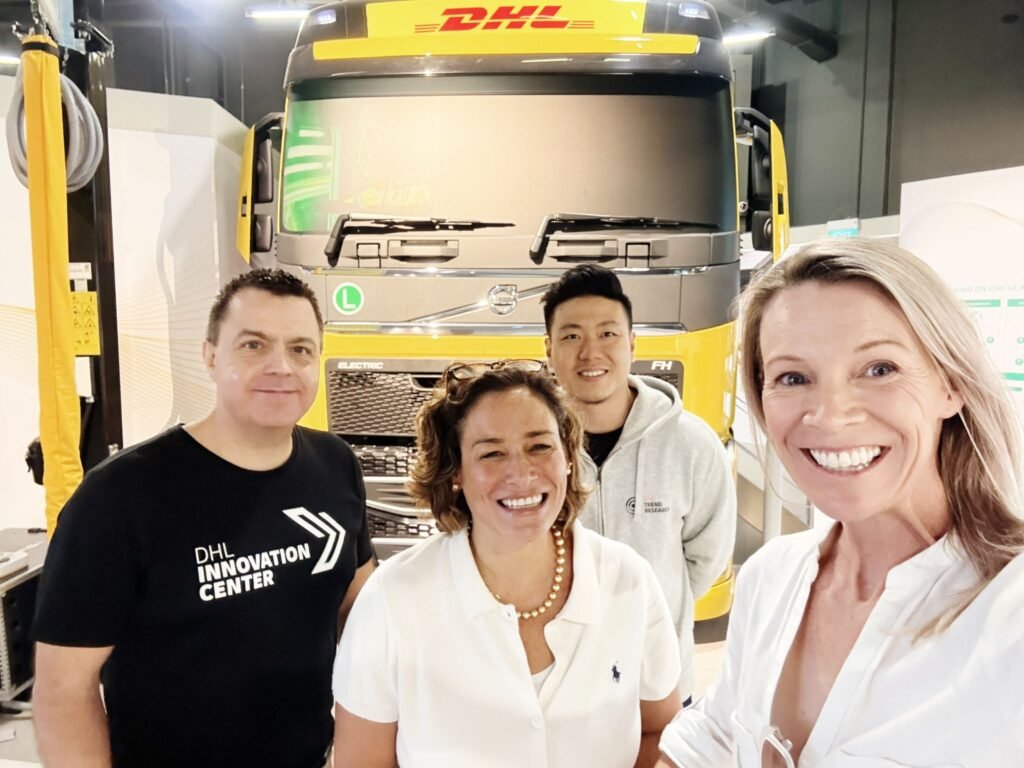
5. It’s clear while looking around the Center that sustainability is a core part of your strategy. How is APAC leading the transition toward a Sustainable Economy for logistics in Singapore?
Sustainability is now a decisive lever for future‑proof logistics, cutting emissions, reducing risk, and building competitive advantage. It is no longer a buzzword but a core differentiator. In APAC, and especially in Singapore, we are accelerating the transition toward a Sustainable Economy by positioning DHL as the “Green Logistics of Choice” and by driving initiatives that set new benchmarks for the industry.
Across the region, we focus on three areas that differentiate DHL in sustainability:
- Leading low‑carbon logistics, supported by science‑based targets.
- Offering the best green commercial solutions, such as our GoGreen Plus product suite.
- Delivering trusted, transparent carbon‑reduction tools, including emissions visibility and reporting.
Globally, transportation accounts for roughly 25% of GHG emissions, making it the second‑largest emitting sector. Without rapid decarbonization of supply chains, many companies will fall short of their climate targets. Customers and investors increasingly choose partners based on transparent, credible climate action.
In APAC, we are setting the pace through both regional partnerships and concrete operational rollouts. Singapore plays a central role in this transition, serving as a testbed for sustainable aviation fuel (SAF) agreements, electric vehicle deployment, and the development of carbon‑neutral facilities. These initiatives not only reduce our emissions footprint but also help customers move closer to their own sustainability commitments.
DHL was the first logistics company to commit to net‑zero emissions and continues to expand its ambition. Under Strategy 2030, we have added the goal of being the “Green Logistics of Choice” alongside our commitments to being Employer, Provider, and Investment of Choice.
Key examples of how we are leading this transition:
- Increasing the share of sustainable fuels in air, ocean, and road transport to 30%.
- This includes SAF agreements implemented through key APAC hubs like Singapore.
- Electrifying 66% of the pickup‑and‑delivery fleet until 2030
6. Looking into the future – are there any moonshot technologies you believe will become standard infrastructure in logistics hubs or warehouses?
Currently there are no warehouse or logistic site(s) that are fully automated, and we don’t foresee that any site will be fully automated in the near future. DHL’s current aim is to support our shrinking and aging human workforce with smarter and more modern technologies. Supply chain automation has become more flexible and mobile, reducing risks associated with technology deployments. Autonomous mobile robots can work with existing infrastructure, allowing for quick deployment, easy scaling, and repurposing as needed. Associates are increasingly receptive to working alongside robotics and automation technology. There is a growing recognition of how innovation can alleviate workforce challenges, making jobs easier and allowing skilled labour to focus on more strategic tasks and professional development.
Looking ahead, however, the biggest shift may not be visible on the warehouse floor at all. It is happening in the digital backbone. Cloud platforms, APIs and real-time data layers that connect every robot, sensor and decision-maker into a single operating system. That is the infrastructure that turns a collection of automated tasks into a truly orchestrated supply chain.
We are always looking to the future and welcome all stakeholders to engage with the open DHL innovation ecosystem. We look forward to continuing to co‑shape the future of logistics together!
Additional information on our more recent thought leadership report: