Could you share more about your internationalisation programs and how they support your home-grown tech businesses expanding globally?
Our KSC internationalisation program is grounded in the belief that local knowledge and industry expertise are essential for successful global expansion. To support startups entering Singapore and Southeast Asia, we work closely with local partners. These local collaborators provide critical market insights, regulatory guidance, and strong industry connections, enabling startups to accelerate their go-to-market and adapt quickly to regional business environments.
In addition, we leverage an extensive network of partnerships across Singapore and the wider region – including government agencies, corporates, universities, and ecosystem players, to facilitate market access, investment and business opportunities.
Can you share some success stories of startups you’ve helped enter the Singapore market? What factors contributed to their success?
Korea and Singapore share common structural challenges, including declining birth rates, ageing populations, and labour shortages. These trends place increasing pressure on both economies to enhance productivity and operational efficiency. In response, both countries are investing heavily in deep technologies and artificial intelligence to drive innovation.
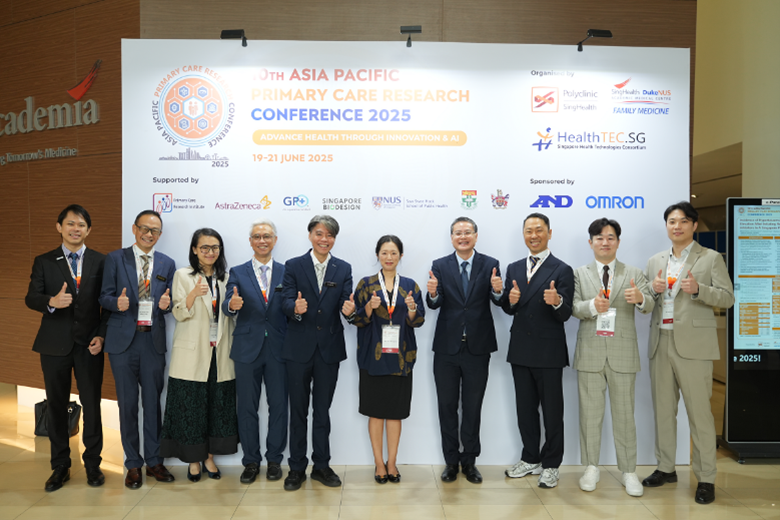
Korean innovations have consequently found strong alignment in Singapore. Healthcare is a prime example, where workforce constraints have accelerated the adoption of AI-enabled solutions to support better clinical decision-making and patient care. Notably, last year, three of our companies – Injewelme, YoungAnd, and Monit, signed an MOU with SingHealth to advance cross-border collaboration.
Are there specific programs, partnerships, or events that have proven particularly beneficial for startups from your country looking to understand and tap into Singapore’s business ecosystem?
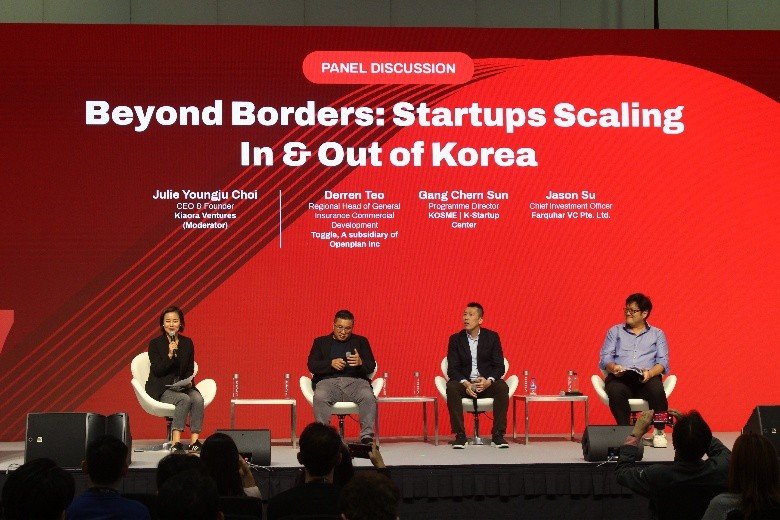
Industry conferences have proven especially valuable for our companies, with SWITCH standing out as a key platform. As one of Southeast Asia’s largest technology conference, attracting over 15,000 attendees annually, SWITCH offers an excellent platform for Korean startups to better understand Singapore’s innovation and business ecosystem. It provides direct access to corporates, government agencies, investors, and potential customers across the region, enabling meaningful market insights and partnership opportunities. On average, each of our participating startup typically secures around 50 business meetings through the conference, making SWITCH a highly efficient and strategic platform.
When startups approach you for guidance on expanding into Singapore, what’s typically their biggest priority—finding local partners, securing funding, or building brand awareness?
For our companies, the top priority is securing business opportunities – finding potential clients and trusted local partners to establish a foothold.
Singapore provides an exceptionally supportive environment, with a proactive government, robust infrastructure, and abundant networking platforms, including major trade conferences. Collaboration with local partners is critical to navigate the market efficiently. Beyond Singapore itself, the city-state also serves as a strategic regional hub, giving our startups a gateway to Southeast Asia and beyond, and offering a fast-track platform to scale their business across the region.
Why should Singaporean startups explore your market as part of their own global expansion journey?
Singaporean startups should consider Korea as a natural next step in their global expansion journey. As Singapore and Korea share similar structural challenges, many solutions developed in Singapore can be highly relevant and scalable in the Korean market.
Plus, Korea aspires to be a leading global startup hub, and the government is actively seeking to attract and support high-potential startups from around the world. This makes it especially timely for startups to capitalize on opportunities in Korea. One such example is ShopBack, one of Singapore’s unicorns, which successfully entered Korea through its acquisition of Ebates Korea.